6.2.5.3 GSM frequency channels
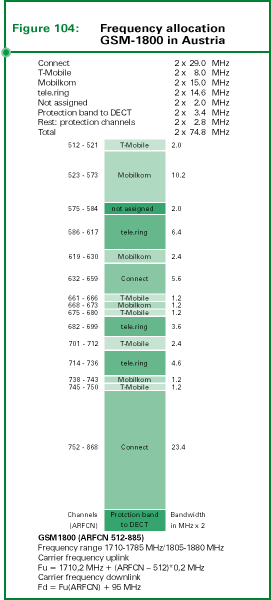
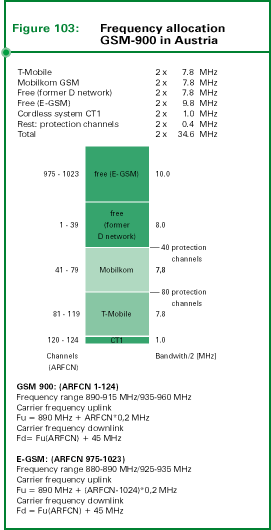
A frequency channel always consists of a band with a width of 200 kHz from the uplink and downlink area. The frequency channels for the GSM 900 band are marked with the numbers 1 to 124 (beginning at the lower frequencies), as well as the numbers 512 to 885 for the GSM 1800 band and the numbers 975 to 1023 for the extension GSM band.
One frequency channel (protection channel) each is kept vacant between the individual frequency packets that are assigned to different operators to avoid mutual interferences between the networks.
In border areas, agreements between countries contain arrangements on preferred frequency regulations, in order to avoid any mutual interferences between GSM operators in neighbouring countries. Along the border between two states, the preferred frequency spectrum of one state will be a non-preferred frequency spectrum in the other state. The conditions for preferred frequencies and non-preferred frequencies are contained in CEPT recommendations T/R 20-08 and 22-07. A certain field-strength value must be maintained in the neighbouring state at a distance of 15 km from the border in connection with preferred frequencies. For non-preferred frequencies this value must be maintained directly at the border.
The use of non-preferred frequencies to supply border areas is therefore possible only to a very limited extent. An operator must therefore have a sufficient number of preferred frequencies in all border regions which he wishes to supply with his services.